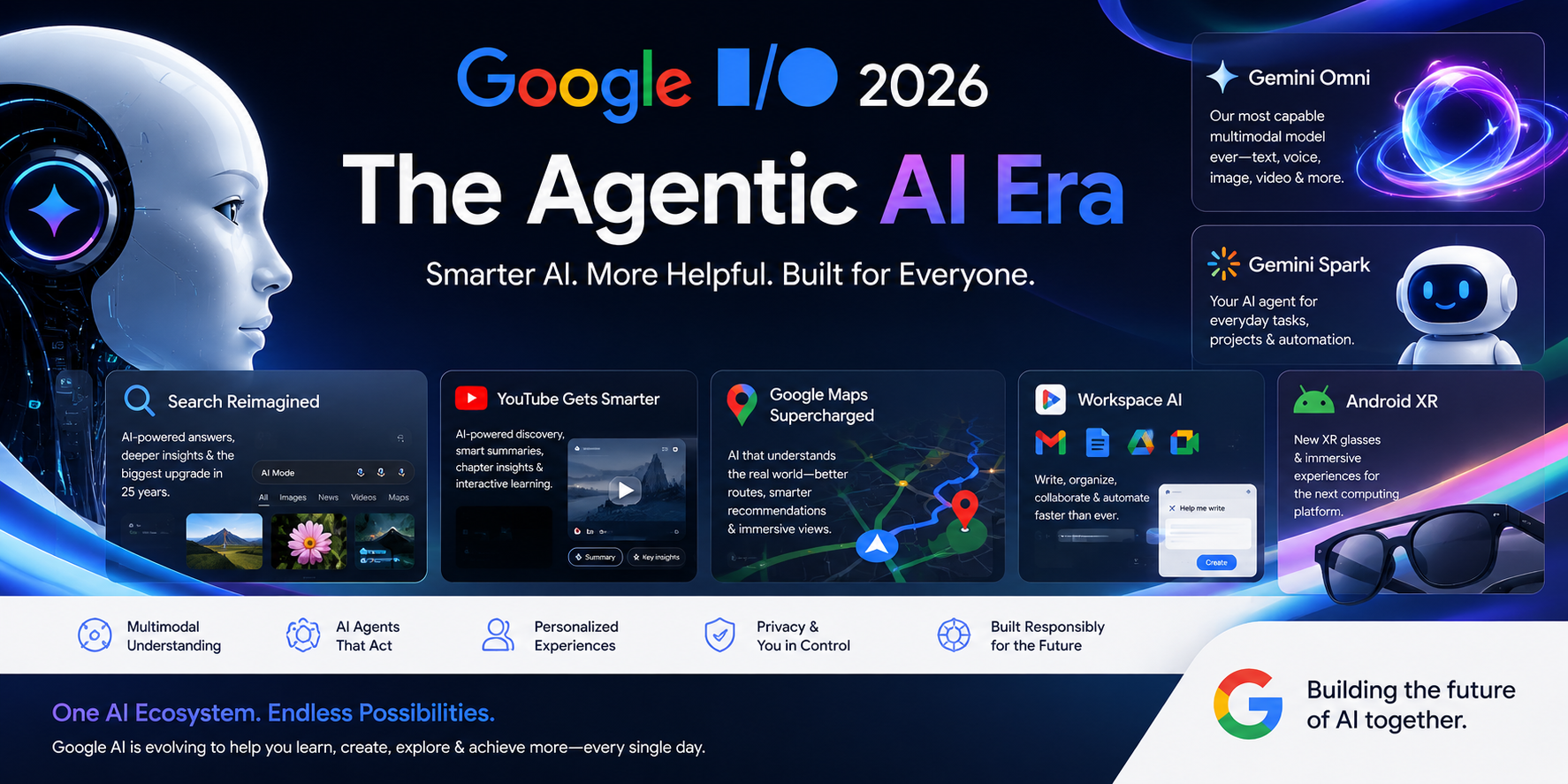
Google I/O 2026 marked one of the biggest moments in Google’s AI journey. During the keynote, CEO Sundar Pichai introduced several AI-powered innovations that are expected to reshape how people search, watch videos, navigate cities, work and interact with technology every day.
From smarter Gemini AI experiences to intelligent upgrades inside Google Search, YouTube, and Google Maps, Google made one thing clear – artificial intelligence is no longer a separate tool. It is becoming deeply integrated into everyday digital life.
If you missed the keynote or are wondering what these updates actually mean for normal users, creators, businesses and students, this guide explains everything in detail.
What is Google I/O 2026?
Google I/O is Google’s annual developer conference where the company introduces its latest technology, software updates, AI innovations and future roadmap. In 2026, the spotlight was almost entirely on artificial intelligence.
Unlike previous years where Android updates dominated the stage, this year Google focused on building an AI-first ecosystem powered by Gemini. Sundar Pichai repeatedly emphasized that Google wants AI to become more helpful, personal and action-oriented.
The biggest shift? Google is moving from AI that simply answers questions to AI that can actively help complete tasks.
Gemini AI: The Center of Google’s Future
One of the most important announcements at Google I/O 2026 was the continued evolution of Gemini AI. Google positioned Gemini as the intelligence layer across almost every Google product.
Instead of opening separate apps for search, email, maps or productivity, Gemini aims to become a smart assistant that understands context and helps users complete tasks naturally.
For example, a user planning a vacation may ask Gemini to search destinations, compare flights, create an itinerary, recommend restaurants using Google Maps data and even summarize YouTube travel videos – all in one experience.
How Google Search is Changing with AI
Google Search is experiencing one of its biggest transformations in years. AI-powered search experiences are becoming more conversational and personalized.
Rather than typing several keywords separately, users can ask detailed questions in natural language. Google’s AI can summarize information, compare products, explain topics and offer follow-up suggestions.
For users, this means faster answers and less time opening multiple websites. For content creators and publishers, it means quality, expertise, trust and original insights matter more than ever.
This also changes SEO. Websites with genuine expertise, practical examples, trusted sources and helpful content are expected to perform better than thin or generic content.
YouTube AI Features: Smarter Content Discovery
Sundar Pichai also highlighted how YouTube will become smarter with AI integration.
Imagine searching for a tutorial without knowing the exact title of a video. Instead of scrolling endlessly, users can ask detailed questions and AI will surface the most relevant moments inside videos.
For creators, this creates better discoverability. Educational creators, reviewers and niche experts may benefit because AI can better understand video context.
Users may also receive AI-powered summaries, recommendations and content suggestions based on their interests, making learning and entertainment more personalized.
Google Maps Gets Smarter with AI
Google Maps is becoming more than just a navigation app. With AI integration, Maps can become a travel assistant, local discovery platform and smarter recommendation engine.
Imagine asking: “Find a quiet café nearby with good coffee and parking,” or “Suggest family-friendly places to visit this weekend.” AI can combine Maps data, reviews, trends, and context to offer personalized suggestions.
For businesses, local SEO becomes even more important. Companies with better reviews, updated business profiles, accurate details and strong customer trust may gain more visibility in AI-powered map results.
Google Workspace AI Productivity
Google is also deeply integrating AI into Workspace products like Gmail, Docs, Sheets and Meet.
Users can summarize meetings, draft emails, organize spreadsheets, create presentations, and brainstorm ideas faster than before.
Students can benefit through better research assistance, professionals can automate repetitive work, and teams can improve productivity through smart collaboration tools.
Android XR and the Future of Smart Devices
Google also discussed immersive experiences powered by Android XR. This includes smart glasses and mixed-reality technology that may redefine navigation, learning and real-time assistance.
Imagine wearing glasses that translate signs while traveling, provide directions using Maps, or identify landmarks instantly. While still evolving, these innovations suggest a future where AI becomes more seamlessly integrated into everyday life.
How Different Users Will Benefit
- Students can research faster, summarize learning material, and understand difficult topics more easily.
- Content creators can optimize discovery through smarter YouTube recommendations and AI-powered content tools.
- Businesses may improve customer service, marketing and local discoverability.
- Everyday users can save time through smarter search, personalized recommendations, and automated assistance.
Google AI Products Working Together
One of the biggest themes from Google I/O 2026 was ecosystem integration. Google wants its products to work together more naturally.
Search, Maps, YouTube, Gemini, Gmail and Workspace are no longer separate experiences. AI acts like a layer connecting them all.
For example, planning a dinner outing could involve Gemini checking Maps reviews, YouTube food recommendations, nearby routes, timings and calendar availability – all within one flow.
What Does This Mean for the Future?
Google’s announcements suggest that the future of technology is shifting from simple search engines to intelligent assistants.
Instead of searching for information manually, users may increasingly ask AI to perform tasks, compare options, summarize data and make recommendations.
However, trust, transparency and accuracy will remain important. Users will continue expecting credible information and Google must balance convenience with reliability.
Final Words
Google I/O 2026 showed that AI is no longer experimental – it is becoming central to how Google products work. Whether through smarter Search, personalized YouTube discovery, intelligent Maps suggestions or Gemini-powered productivity, users are likely to experience more seamless digital assistance in everyday life. For tech enthusiasts, businesses, creators, and students, understanding these updates early can provide a major advantage.
It is Google’s annual conference where new AI features and product updates were announced.
Gemini is Google’s AI assistant integrated across multiple Google products.
Search is becoming more conversational and AI-driven.
Yes, for smarter discovery and better recommendations.
AI will make local recommendations more personalized.
Yes, through research, summaries, and productivity tools.
Yes, especially through local SEO and AI productivity.
Google’s immersive mixed-reality ecosystem.
To make products more helpful and task-oriented.
AI will become more integrated into daily digital experiences.